Each summer, members of the English Department offer reading recommendations for the Detroit Mercy community. This year’s recommendations include books folks have loved and books they plan to read this summer. Leave your own recommendation in the comments!
Undermajordomo Minor, Patrick deWitt
Emma Trawally Porta, Class of 2024
I wish I could read this book for the first time to experience how it became meaningful to me once again. I still have one of the book’s quotes printed on the wall of my bedroom. This is a perfect summer reading, as it feels like watching a Tarantino movie after coming back from a long beach day.

Covenant of Water, Abraham Verghese
Prof. Mary-Catherine Harrison
This was my favorite read last summer—it’s a can’t-put-down, stay-up-late kind of book. Verghese is a physician-writer, and the book is both family saga and medical mystery: generations of a Malayali family in South India are plagued by a mysterious “condition” that leads to hearing loss and drowning. I am starting this summer with Verghese’s Cutting for Stone in hopes to relive last year’s magic.

Lost in the City and All Aunt Hagar’s Children, Edward P. Jones
Prof. Mary-Catherine Harrison
This year I was haunted by Edward P. Jones’s short story “Old Boys, Old Girls,” which I discovered, lost, found, and taught, prompting one of the most exciting conversations I have had in the classroom (shout out to my Honors Study of Fiction crew). This summer, I want to read both of Jones’s short story collections, Lost in the City (1992) and All Aunt Hagar’s Children (2006), which includes “Old Boys, Old Girls. The two books are a literary dyad—the characters from one reappear later in life in the other. I want to meet Caesar when he was a younger man.
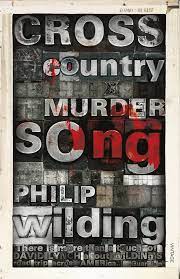
Cross Country Murder Song, Philip Wilding
Prof. Molly Barlow
A disjointed novel-in-stories with a lead character who has a lot of baggage driving across the country, and individual stories about the people whose lives he inadvertently touches. It’s full of hopelessness and sadness, but it’s awfully hard to turn away from once you start looking.
Any of T.C. Boyle’s short fiction, especially “Sorry Fugu” and “Stones in My Passway, Hellhound on My Trail”
Prof. Molly Barlow
There’s just so much good with Boyle. He’s this delicate balance of West Coast and dirty realism, and he understands how people work, almost to a fault. “Stones” is one of the reasons I stuck as a Creative Writing major, and if you’re a foodie, “Fugu” will resonate. (Individually, “Fugu” is part of the If the River Was Whiskey collection, and “Stones” is in Greasy Lake; both are part of the larger collection Stories.)

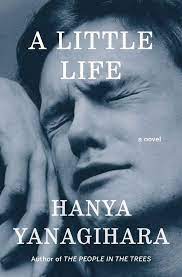
A Little Life, Hanya Yanagihara
Prof. Lauren Rinke
Several trigger warnings here: sexual abuse, child sexual abuse, scary verbal abuse, psychological manipulation and gaslighting, kidnapping/imprisonment, many modes of self-harm, a violent accident, a few moments of prejudice against the disabled, drug use, addiction, grief and loss of a loved one… HOWEVER… Although this book is difficult to get through, the multi-faceted characters and their realistic relationships, and how they deal with their trauma, makes it a worthy read.
The Light Pirate, Lily Brooks Dalton
Prof. Lauren Rinke
Set in Florida in the not-too-distant future, a young girl discovers she has powers and must learn to survive on her own, as climate change ravages the world around her. Equal parts survival story, commentary on climate change, coming-of-age, and redemption/optimism.

Demon Copperhead, Barbara Kingsolver
Prof. Lauren Rinke
A modern adaptation of Dickens’ David Copperfield, set in the rural south. Powerful, heartbreaking, and full of hope.

James, Percival Everett
Prof. Stephen Pasqualina
I’m going off script here and adding a book I haven’t yet read but plan to read this summer. In his new novel James (2024), Percival Everett—the author of Erasure (2001), on which the 2023 Academy Award winning American Fiction is based—has rewritten Mark Twain’s iconic Adventures of Huckleberry Finn. Everett’s re-imagining is centered on a shift in narrative voice: where Twain’s novel is spoken from the first-person voice of young Huck Finn, Everett’s James is narrated by the character known as Jim, an enslaved runaway.

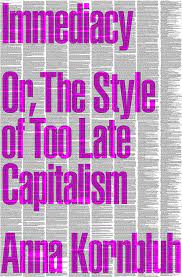
Immediacy, or the Style of Too Late Capitalism, Anna Kornbluh
Prof. Stephen Pasqualina
To be honest, I have mixed feelings about this book, but I would recommend it to anyone curious about what Kornbluh (following Fredric Jameson) calls the “cultural dominant” of our moment: the “speed, flow, and direct expression” of our technologically mediated lives. Kornbluh’s reading of the Immersive Van Gogh Exhibition is worth the price of admission.
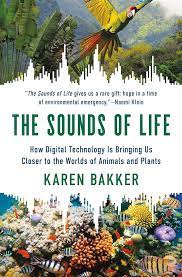
The Sounds of Life: How Digital Technology Is Bringing Us Closer to the Worlds of Animals and Plants, Karen Bakker
Prof. Erin Bell
If it wasn’t immediately apparent to my colleagues here at the University, I am a true gen X-er, and like so many of my contemporaries, I went through what could only be called an obsession with whales in the 1980s. At eight and ten years old, I sent in my allowance to Greenpeace and the National Wildlife Organization, hoping that my quarters and dimes would somehow aid in our endeavors to undo some of the prolific damage wreaked upon marine environments around the world. (This fascination was obviously underscored by the role that whales play in Star Trek IV: The Voyage Home – but I digress).
Perhaps a shadow of that “Save the Whales” rhetoric which framed my childhood is one of the many reasons I found Karen Bakker’s The Sounds of Life: How Digital Technology Is Bringing Us Closer to the Worlds of Animals and Plants so compelling. Recommended by Dr. Prasad Venugopal as a reading selection for the Science, Technology, and Race Learning Community, I found Bakker’s exploration of media and technology to study of flora, fauna, and animals fascinating. Did you know turtles talk? Well, I did not, and Bakker dedicates an entire chapter to understanding how communication functions for turtles. The chapter regarding the study of whale communication is truly incredible; especially after reading all that Melville during graduate school.
One key point that Bakker’s text elucidates is that indigenous knowledge has tracked many of the data points that Western science is just now exploring. Overall, while this is a long, comprehensively researched book, the rich chapters are led by Bakker’s clear prose. While my summer reading typically meanders towards fiction, The Sounds of Life… is a fascinating read that I think readers across the disciplines would find of interest.
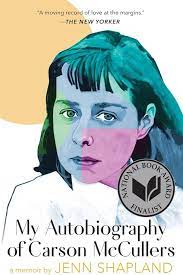
My Autobiography of Carson McCullers: A Memoir, Jenn Shapland
Prof. Erin Bell
Alienated. Isolated. Freakish. Marginalized. Deviant. These are just a few of the keywords that typically describe the works and characters of American author Carson McCullers. An argument that follows is that many of these signifiers also speak to McCullers herself, who has been painted everything from a wunderkind to an eccentric by past biographers and critics.
Jenn Shapland’s memoir, however, adds one crucial facet of McCullers’ identity that has been erased, overlooked, and negated; namely, that McCullers was a lesbian. Inspired and moved by love letters she discovers at the Ransom Center between Annemarie Sterzenbach and Carson McCullers, Shapland’s memoir is a journey through the McCullers archive which focalizes on McCullers’ queer desire. I like how Shapland’s book blurs the generic boundaries between biography and memoir and how Shapland lays her narrative bare as she traces McCullers’ life story concurrently with her own. The memoir shows Carson McCullers’ life and how biographies are revised, shaped and edited.
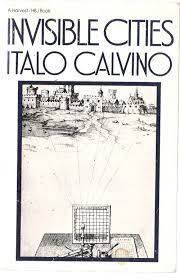
Invisible Cities, Italo Calvino
Prof. Sigrid Streit
Imaginative and philosophical short descriptions of imagined cities, written by adventurer Marco Polo. “There’s Armilla, the city that is either unfinished or half-demolished (nobody is quite sure); there’s Sophronia, where half the city is regularly folded up and put away like a travelling fairground; or there’s Leonia, which throws out so much rubbish every day ‘a fortress of indestructible leftovers surrounds [it], dominating it on every side, like a chain of mountains.’”
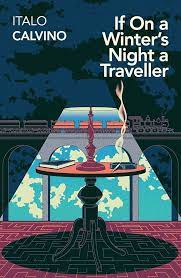
If on a winter’s night a traveler Italo Calvino
Prof. Sigrid Streit
If you think this is a weird title, it will eventually make sense. A story within stories.
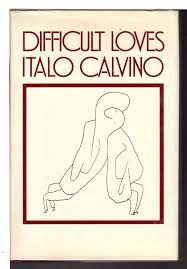
Difficult Loves Italo Calvino
Prof. Sigrid Streit
A brilliant collection of short stories, all centered around the theme of, well, difficult loves.
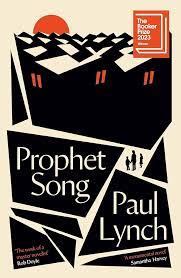
Prophet Song, Paul Lynch
Rebecca Tull, Librarian
This book runs on momentum, character, and tension. Set in a very near future Ireland after a radical right-wing party comes to power, the story follows the disintegration of an Irish family after the disappearance of the father at a protest march. The events feel extremely tangible in their impact on his wife, dementia-afflicted father-in-law, and kids. This 2023 Booker Prize winner is also available at the McNichols Campus Library.
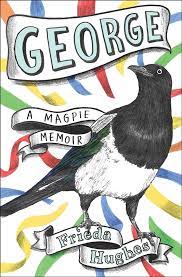
George: A Magpie Memoir, Frieda Hughes
Rebecca Tull, Librarian
Stepping into the world of Hughes, who is an artist and the daughter of poets Sylvia Plath and Ted Hughes, and her adventures in corvid rescuing, garden building, home renovations, and relationships, was thoroughly enjoyable, not the kind of thing I usually read. I listened to the audio version of this book and suspect Hughes’ voice and delivery may be one you will either love or hate, but it fit the story for me. I also learned a lot about magpies (clowns of the bird world, it turns out)!
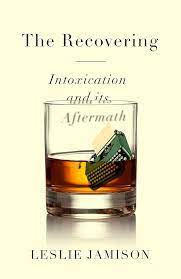
The Recovering: Intoxication and Its Aftermath, by Leslie Jamison
Prof. Amanda Hiber
I bet you never thought a book about alcoholism could be a page-turner. And yet, I could not put this book down. It’s not just a memoir of the author’s relationship with alcohol, it’s also a history of the treatment of substance abuse disorders and recovery movements such as Alcoholics Anonymous. A good portion is also literary history, strewn with drunken tales—ranging from comedic to horrifying—of some of the most infamous alcoholic poets and authors. Jamison weaves research into her personal narrative just as its wisdom weaves itself into her recovery journey. This is a brilliantly constructed and beautifully written book whose insights about love, identity, empathy, and connection will stay with you.
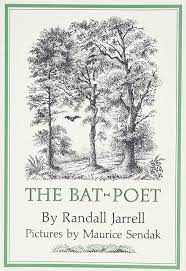
The Bat-Poet, Randall Jarrell and Maurice Sendak
Prof. Stacy Gnall
A little, beautiful book (a children’s book, technically) written by the poet Randall Jarrell and illustrated by Maurice Sendak (of Where the Wild Things Are fame). I found an old copy of this at a flea market recently and immediately fell in love. It’s about a young bat who refuses to sleep during the day like the other bats. He does this so that he can see the full, lit beauty of the world—about which he writes poems. A very endearing book with some genuinely apt advice for poets of any age.
I’d also like to recommend books by 3 wonderful women with whom I shared a panel at this year’s AWP (Association of Writers and Writing Programs) Conference. I’ve included each of their most recent titles, with synopses from their websites:
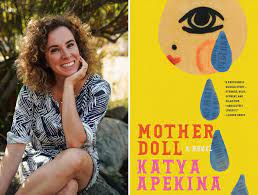
Mother Doll, Katya Apekina
Prof. Stacy Gnall
“Zhenia is adrift in Los Angeles, pregnant with a baby her husband doesn’t want, while her Russian grandmother and favorite person in the world is dying on the opposite coast. She’s deeply disconnected from herself and her desires when she gets a strange call from Paul, a psychic medium who usually specializes in channeling dead pets, with a message from the other side. Zhenia’s great-grandmother Irina, a Russian Revolutionary, has approached him from a cloud of ancestral grief, desperate to tell her story and receive absolution from Zhenia.”
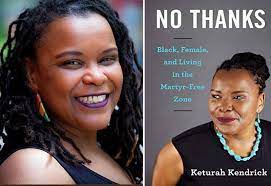
No Thanks: Black, Female, and Living in the Martyr-Free Zone, Keturah Kendrick
Prof. Stacy Gnall
“Through eight humorous essays, Keturah Kendrick chronicles her journey to freedom. She shares the stories of other women who have freed themselves from the narrow definition of what makes a “proper woman.” Spotlighting the cultural bullying that dictates women must become mothers to the expectation that one’s spiritual path follow the traditions of previous generations, Kendrick imagines a world where black women make life choices that center on their needs and desires. She also examines the rising trend of women choosing to remain single and explores how such a choice is the antithesis to the trope of the sorrowful black woman who cannot find a man to grant her the prize of legal partnership. A mixture of memoir and cultural critique, No Thanks uses wit and insight to paint a picture of the twenty-first-century black woman who has unchained herself from what she is supposed to be. A black woman who has given herself permission to be whomever she wants to be.”
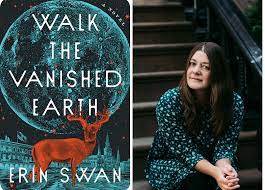
Walk the Vanished Earth, Erin Swan
Prof. Stacy Gnall
“It is 1873, and Samson butchers bison on the Kansas plains, hungering for a family and farm of his own. It is 1975, and twelve-year-old Bea walks north from New Mexico, bearing a baby she believes will be a giant. It is 2027, and Kaiser scavenges for supplies in flooded New Orleans, mourning what she lost to the water. It is 2073, and young Moon traverses the surface of Mars, questioning why she has only known the tall white Uncles with whom she travels. Spanning two hundred years, seven generations, and two planets, WALK THE VANISHED EARTH follows one American family through psychological devastation and environmental collapse, as they seek to realize their oversized dreams and make their world anew.”
 Between the Pages
Leave a comment