At this year’s Celebration of Scholarly Achievement and Community Engagement (CSACE), held on April 3rd 2025, University of Detroit Mercy students gathered for a reading of original ekphrastic poetry—poetry that describes, or otherwise responds to, visual art.
This panel reading consisted of eight student writers—Jannath Aurfan, Maria Bitar, Emma Boucher, Alexander Comer, Asha George, Michelle Gomez-Angeles, Isabella Goolsby, and Giovanni Romero—sharing poems inspired by an array of visual art—from iconic paintings by Vincent van Gogh to a photograph from this past February’s nationwide “Day Without Immigrants” protest.
To celebrate their achievement, we share here a selection of this outstanding work.


Cassius Marcellus Coolidge’s painting Dogs Playing Poker caught my eye because of its surprising sense of drama. Despite the absurdity of dogs sitting around a poker table, there’s real tension in their expressions and postures like humans playing a game. I focused my ekphrastic poem on this tension and personification by describing the thoughts and actions of each dog and went beyond the painting by adding what happens next. The expansion of the game beyond what is in the painting is why I think ekphrastic poetry is so fun. It encourages the poet to explore the possibilities left unsaid. Emma Boucher ’25

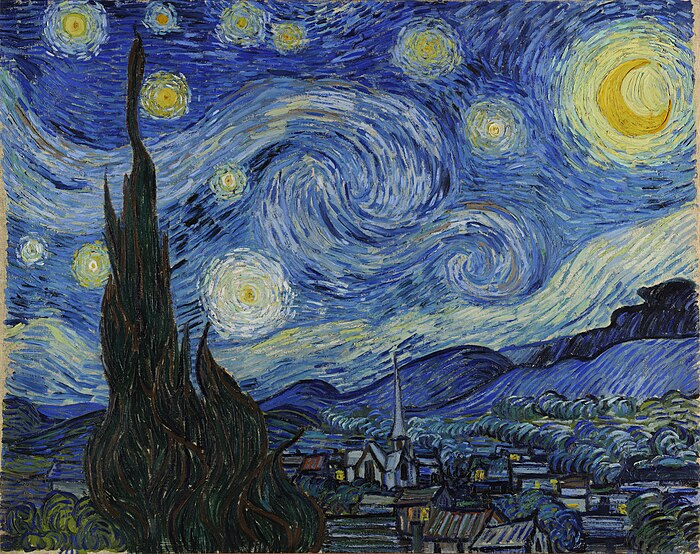
I’ve always loved landscape pieces with beautiful skies. It made Starry Night the obvious choice for an ekphrastic. However, since the piece is a classic, I’ve seen other poems about it. To avoid writing something that’s already been written, while drafting, I ignored the sky completely, only noting small details in the town. That’s where I found this tiny stroke in one of the windows. It looked like a person, so I decided to write from their POV. I love how ekphrastics not only tell a painting’s story from different perspectives but also sometimes tell a new story themselves. Asha George ’26
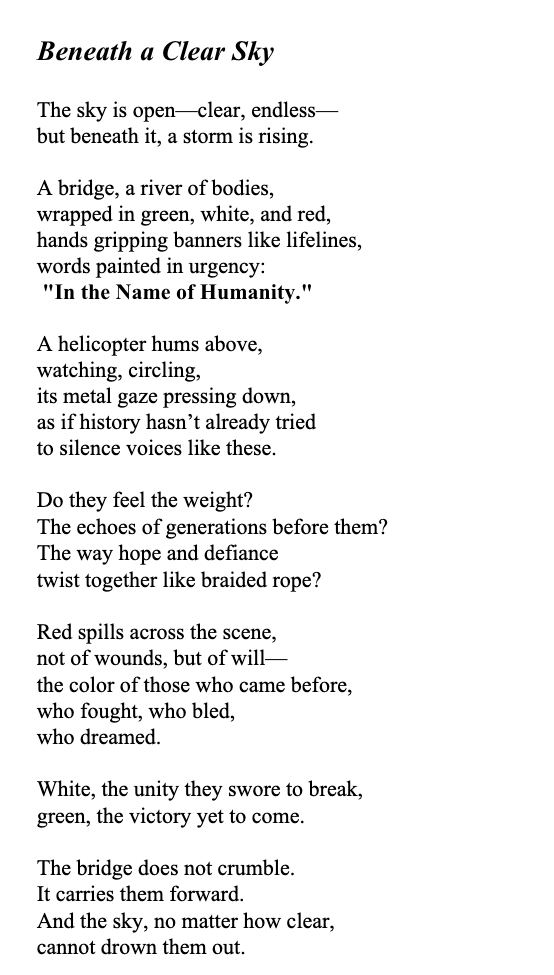
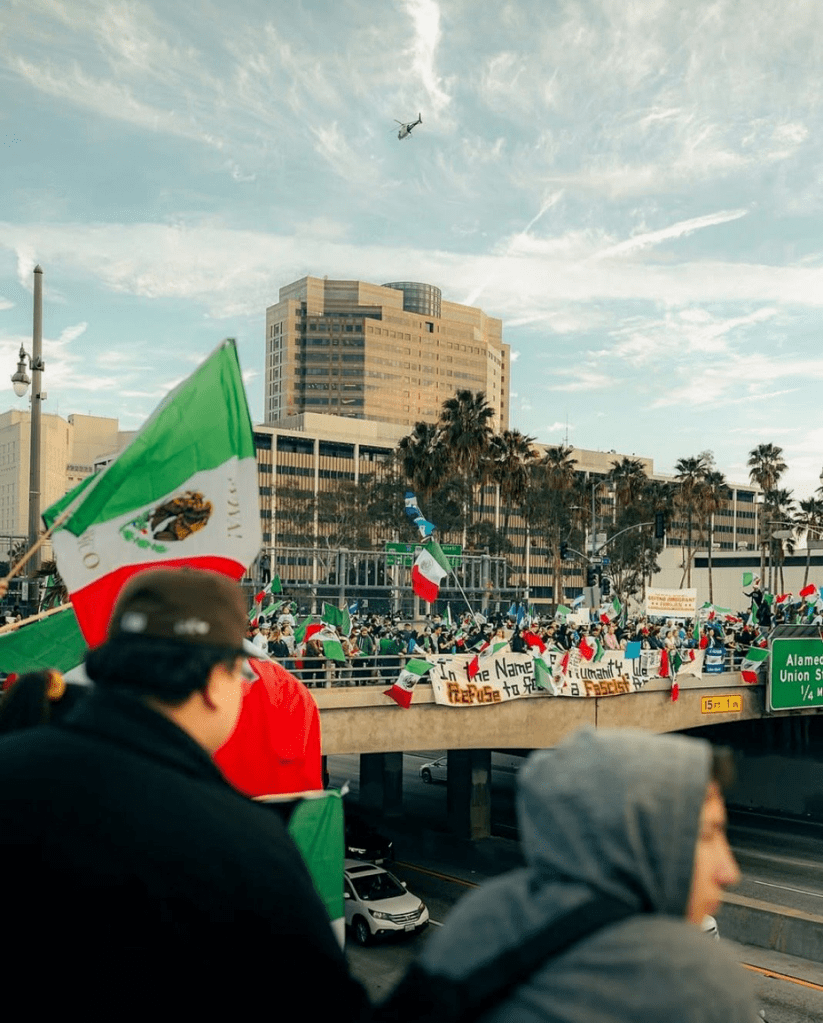

I chose Jake Crandall’s photograph (from social media), which captured a powerful protest scene that reminded me of immigrant rights rallies happening at the time. The image spoke to me as a moment of hope, unity, and strength. For my poem, I focused on the emotions of the people in the image—their frustration, pride, and fight for a better future. Ekphrastic poetry allows readers to connect with art, reflect on history and fairness, and consider the world we want to create together. Michelle Gomez-Angeles ’27
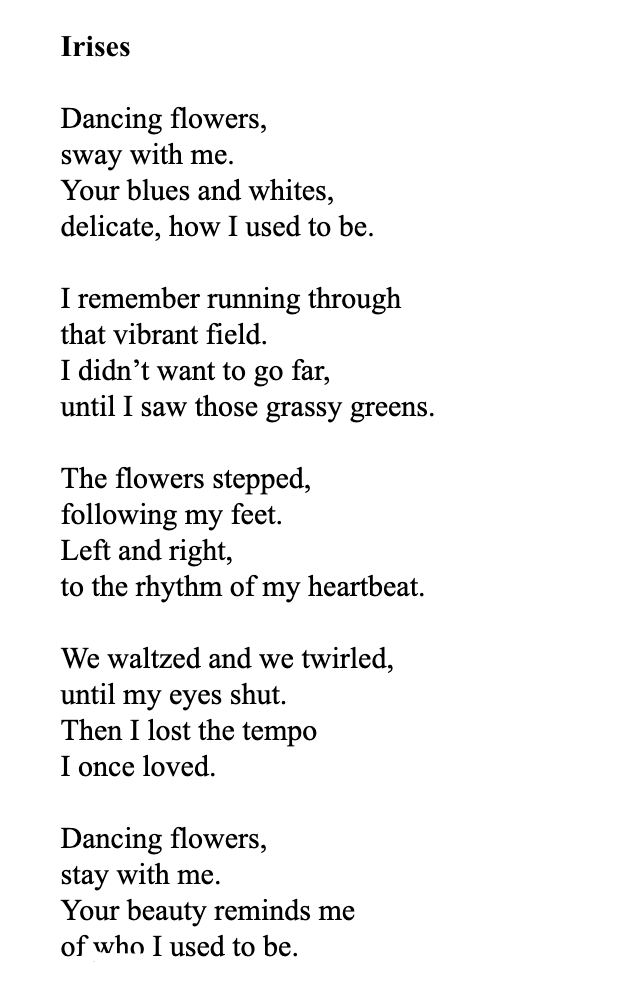
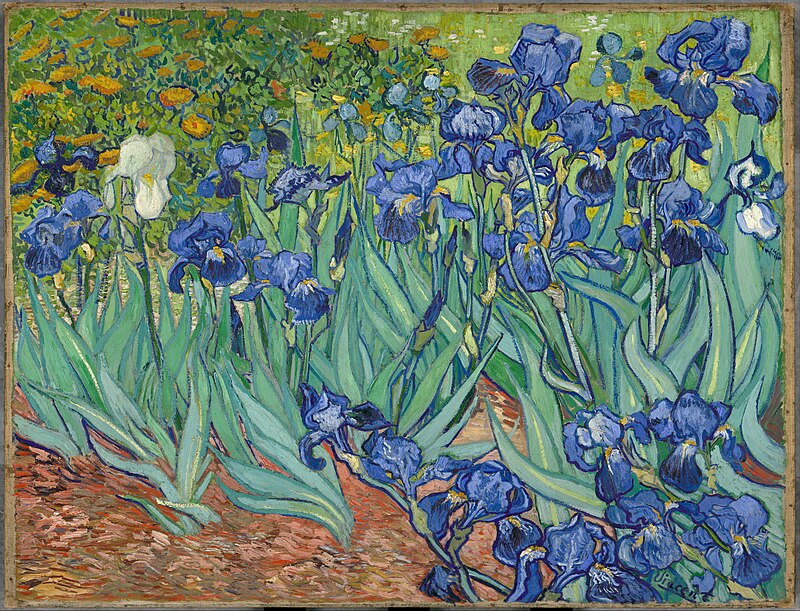

Vincent van Gogh’s painting Irises caught my attention because the flowers looked like they were dancing. I noticed the leaves looked almost like arms and when the thought struck me, I knew I had to write about it. I approached my poem by focusing on these dancing flowers and their colors. I also focused on the feeling the painting gave me; it seemed to sway me along with the flowers. Ekphrastic poems are a great way for two forms of art to come together to explore new feelings and emotions. Maria Bitar ’25
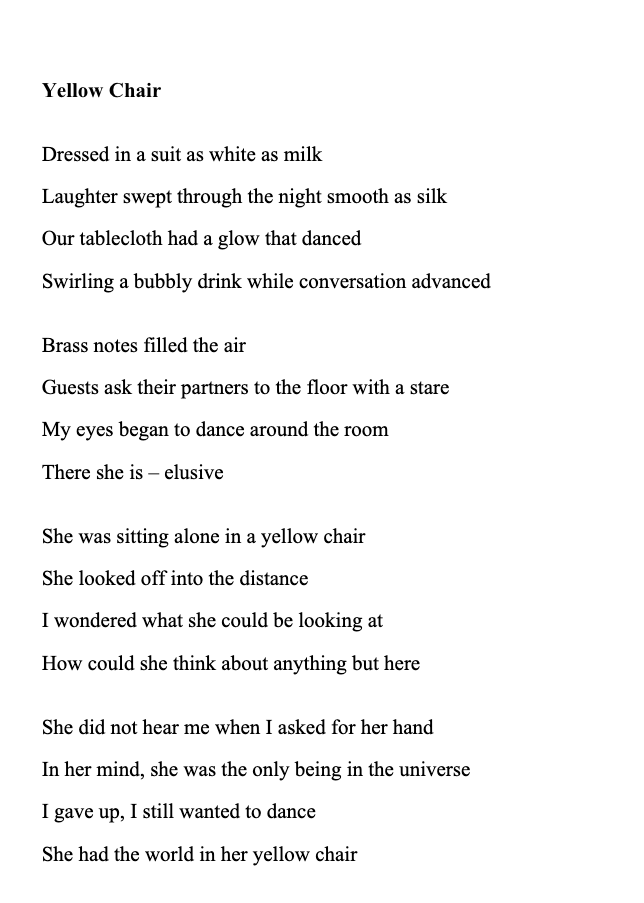
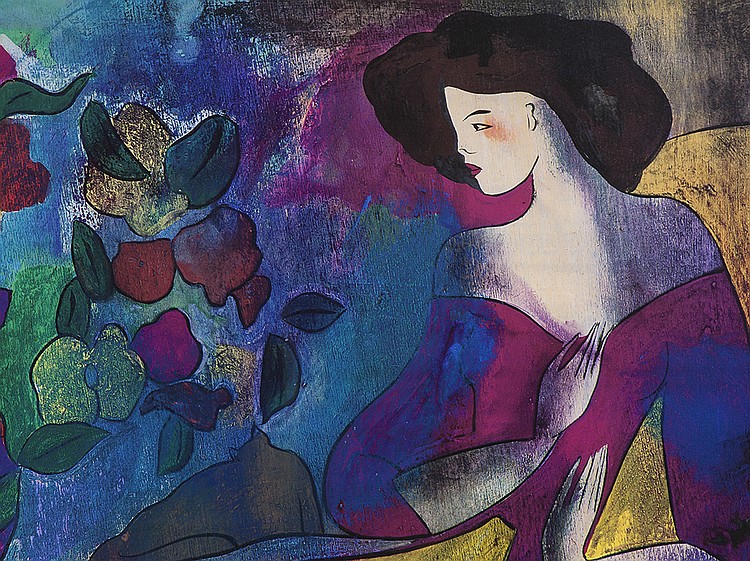
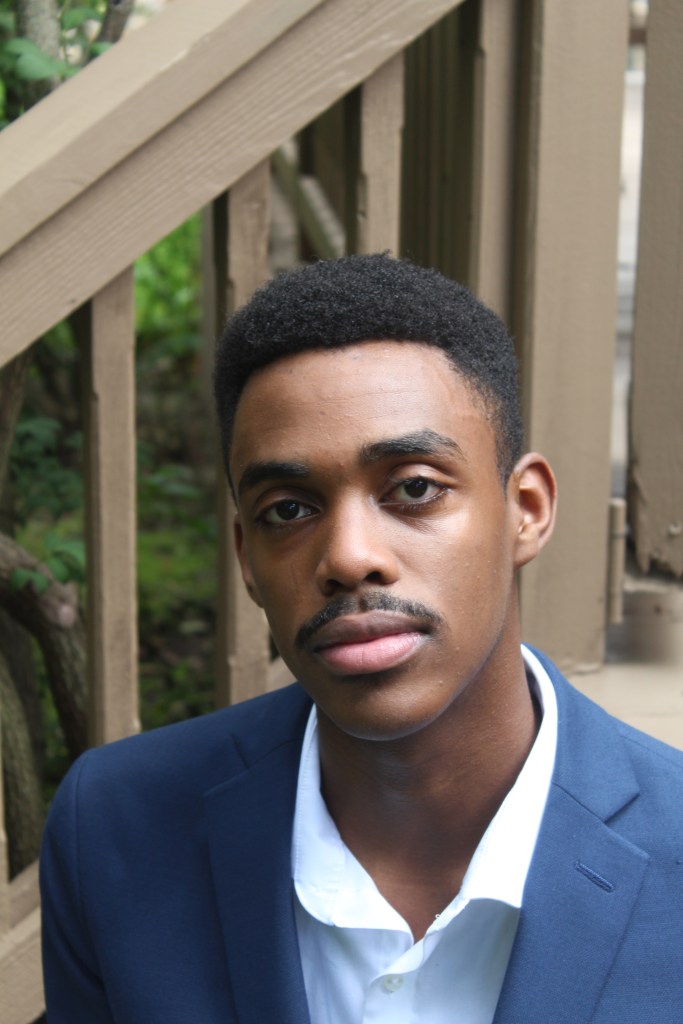
Annabella, a painting of a beautiful woman seated in a yellow chair, hangs quietly in my parents’ living room. For years, I would walk past her, feeling she deserved more than a glance. Her presence called for a story, though nothing that changed her world, only something that would expand it. In writing this poem, I gave Annabella the attention I always felt she deserved by placing her at the center of a world she quietly commands. Alexander Comer ’28
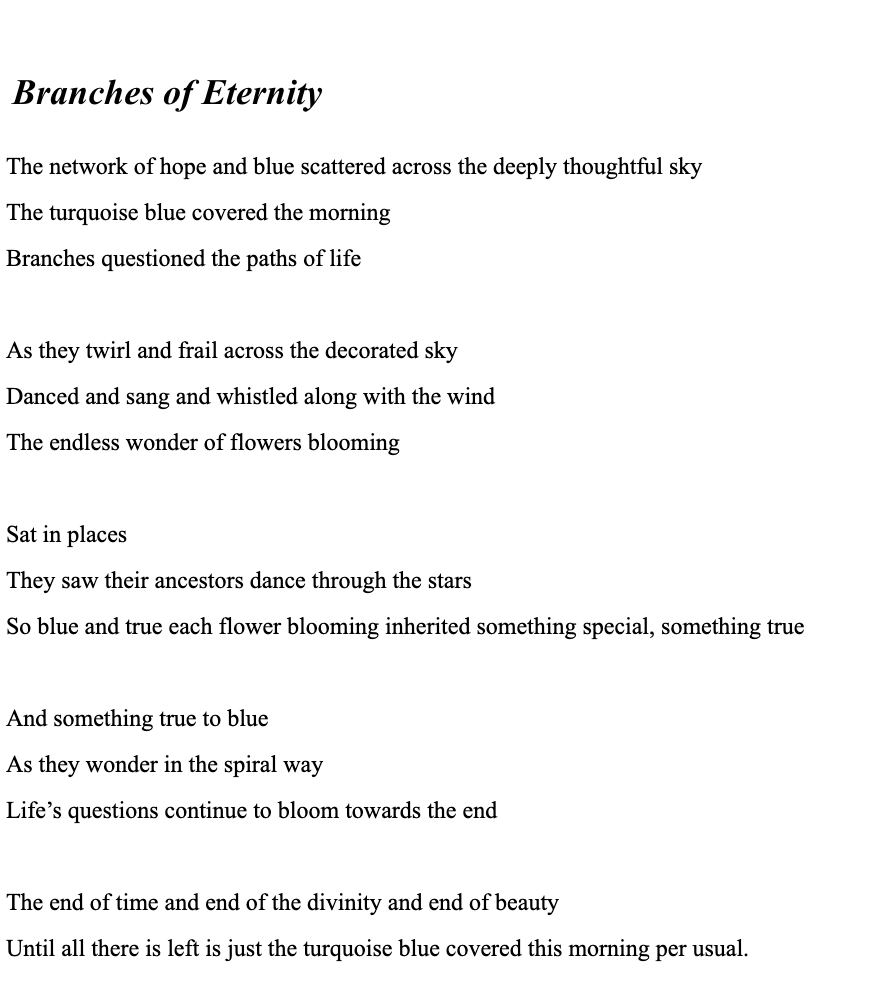
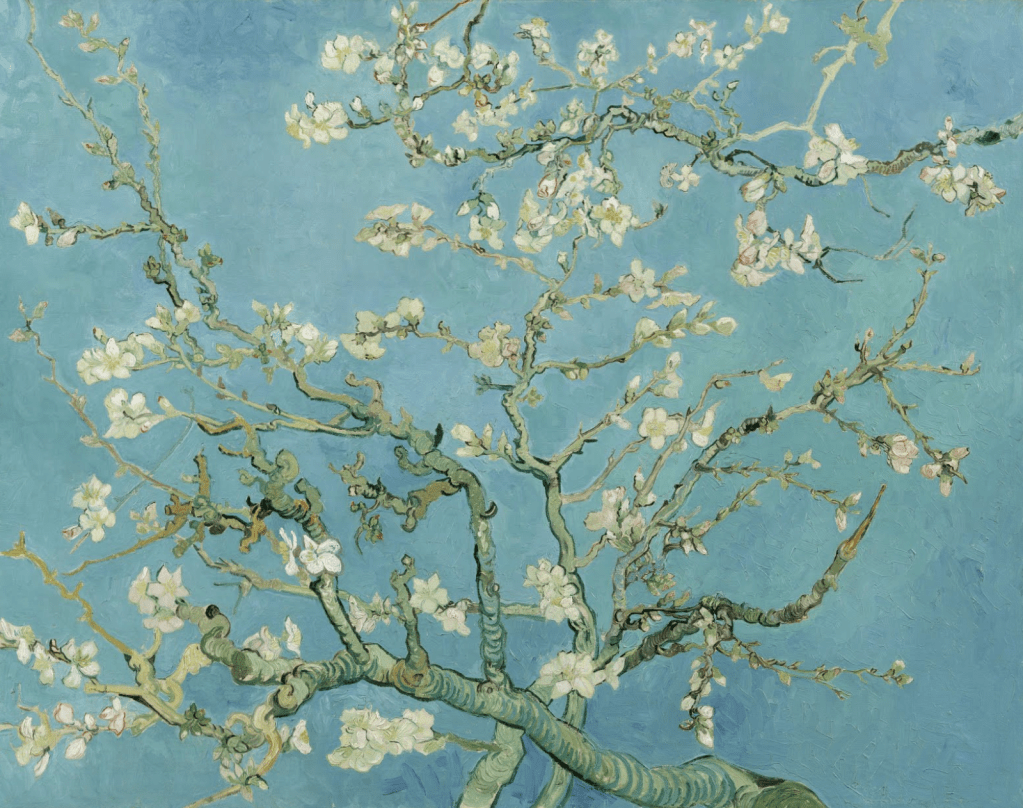

I am drawn to the blossoms of van Gogh’s painting, and the approach I took in writing my ekphrastic poem was to focus on the connection I experience when looking at it, and to leave this behind as an artist. I love blues because they remind us of moments when one may feel lost, but also because they create wonder. The focus here is on escaping into endless wonder. The collaboration between the painter and the artist-of-words is why I think ekphrastics can be exciting. Jannath Aurfan ’25
 Between the Pages
Leave a comment