
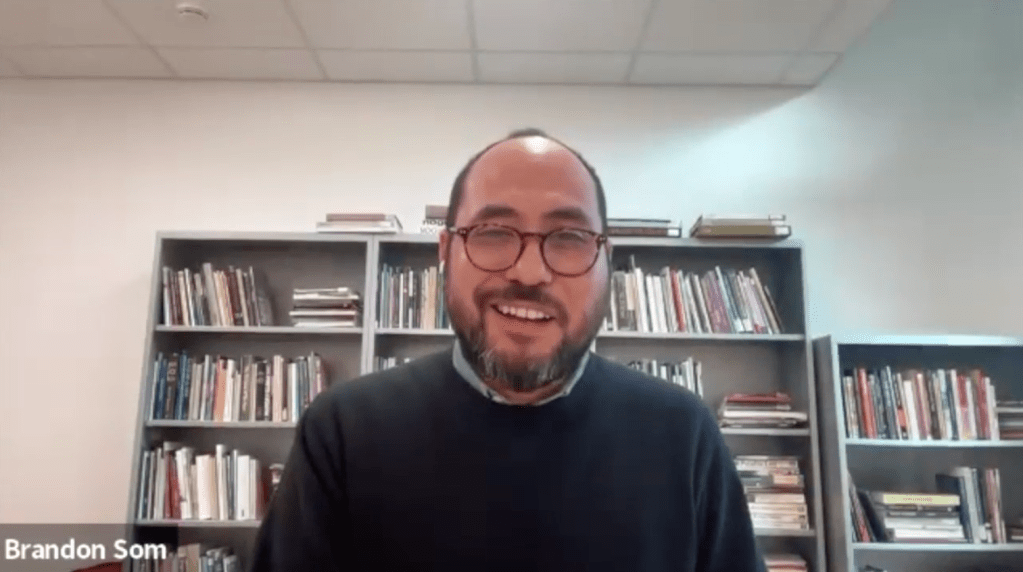
On Thursday, January 16th, Pulitzer Prize winner Brandon Som spoke with UDM students via Zoom after reading from his book Tripas, a collection of poems largely dedicated to Som’s maternal grandmother.
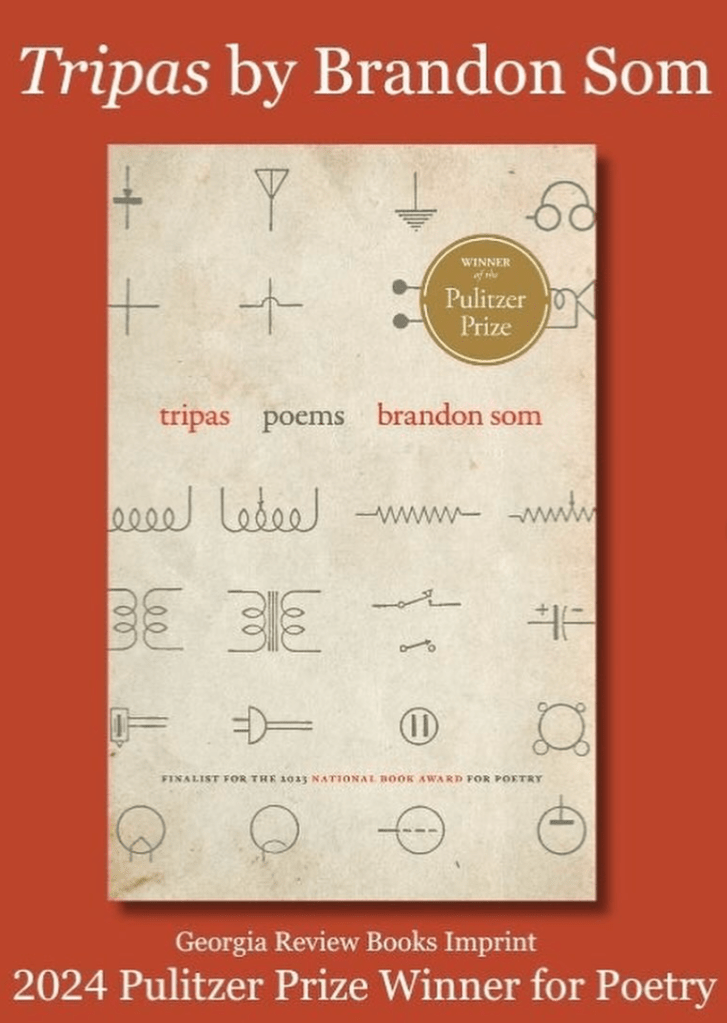
In Tripas, Som uses images of circuitry to describe the long hours his grandmother spent on the factory line. The cover of the book mirrors this imagery with a diagram of circuits from the 1922 book The Radio Boys’ First Wireless. During the Q&A session, Som explained how, in addition to the content and the words that he included in his collection, he was also very intentional about this cover. He pointed out, “that as technology got smaller, we failed to recognize and acknowledge those that build and take care of technology.” The way that technologies are sold to us erases the hardships of labor that maintain these technologies. But Tripas is also a reminder of how technology can connect families. “I might hear in that technology my family’s song, in broken pieces, bits of gossip like a game of telephone or Chinese whispers” he writes in his poem “Teléfono Roto.”
Throughout Tripas, Somtraces elements of familiarity and unfamiliarity that he experienced while growing up and trying to embrace his Chicano identity. During the reading, he explained to the audience between poems that he grew up with a family that would speak Spanish around him, and although he could understand the Spanish he heard, he did not know how to speak the language himself. He experienced a deep sense of sadness from this, so he took Spanish classes. The poems of Tripas are a testament to this experience, as Som brings the sounds of Spanish to vivid life through the collection’s poems.
Som also brings to life the political climate of the 1970s. In his poem “Raspadas,” he focuses on Chicano history and the history of labor unrest in Arizona, his home state. Here, Som reflects upon the conservative climate of Arizona at this time, and how it prohibited collective organizing. He shared that the historic Santa Rita hall, where famous protests occurred, was right across the street from where his grandmother sold raspadas (snow cones). “They chanted with Correta Scott King and Joan Baez ‘Si se puede,’” he writes, “Across the street from my nana’s tiendita y raspadas con leche, con piña, con fresa.”

As a poet, Som is always attentive to the sounds of the words he chooses. In the poem “Inventory,” for instance, he places his readers in his father’s store, where he would spend weekends as a child, hearing his paternal grandmother speak Taishanese, a dialect native to the Taishan region of Guangdong, China. In the poem, he focuses specifically on the “awe” sounds that his Grandmother would make when speaking to him. He writes: “She tied the awe to my name and the knot was knowing.”
Throughout “Inventory” and all of Tripas, Som evokes how even the seemingly slightest of sounds can be distinct, memorable, and meaningful—connecting us to our families and to our collective pasts.
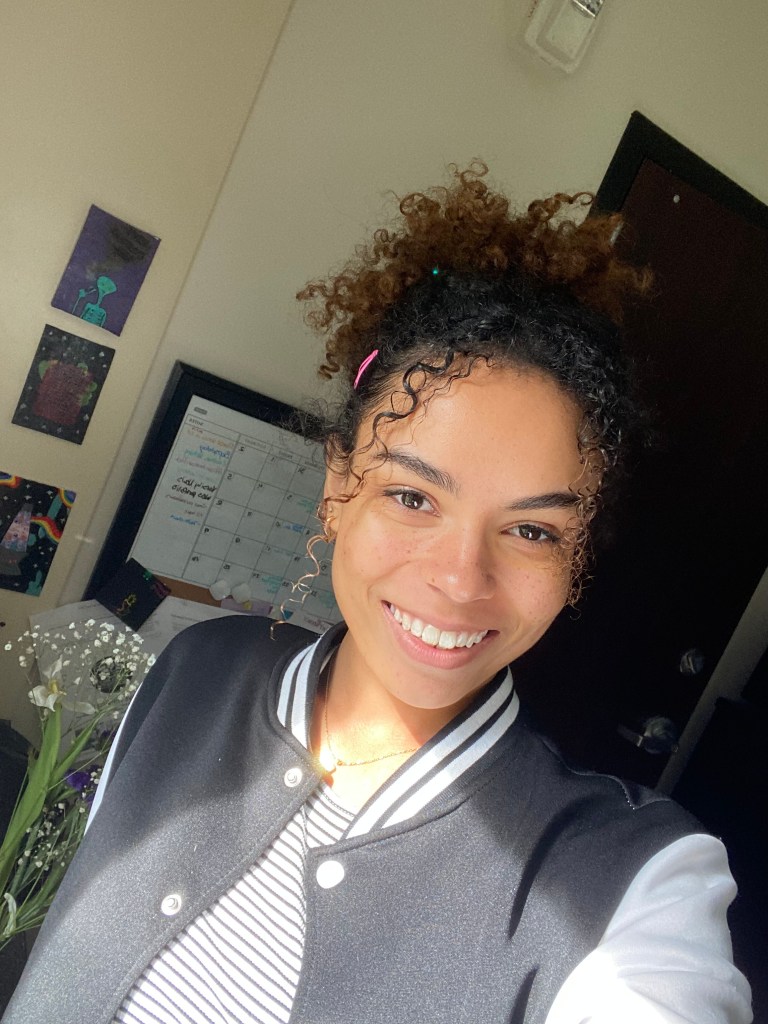
Kateri Sollars is a senior at the University of Detroit Mercy, majoring in Psychology and minoring in both Creative Writing and Women’s and Gender Studies. She writes for The Varsity News and is also co-host of the UDM podcast “What’s the Tea With Ministry.” When she’s not in the studio or writing an article, she spends her time reading, painting, and hanging out with friends. She can be found working as a sacristan on the weekends and planning events for the Black Student Union. After she graduates, she plans to pursue a Master’s in Communication Studies and become a journalist.
 Between the Pages
Leave a comment