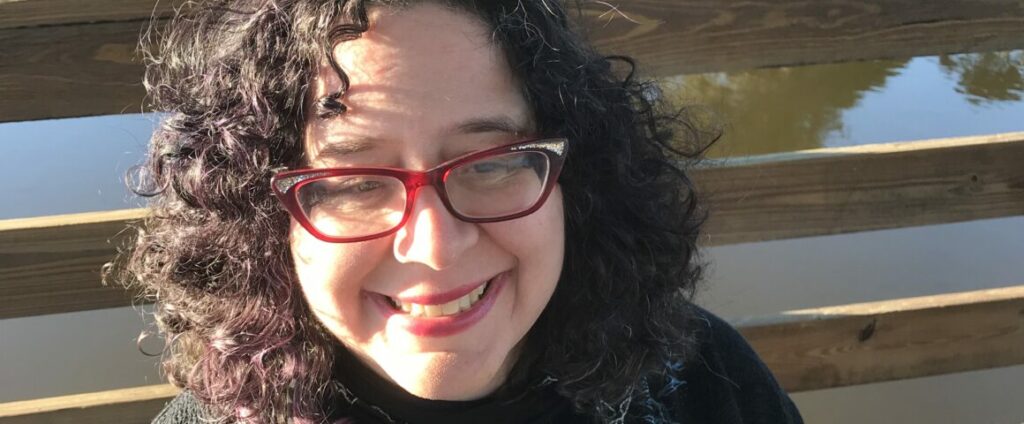
On October 1, 2025, the University of Detroit Mercy hosted a virtual poetry reading featuring Joanna Fuhrman, poet and Assistant Teaching Professor in Creative Writing at Rutgers University. A graduate of the University of Washington’s MFA program, where she received both the Academy of American Poets Prize and the Joan Grayson Award, Fuhrman’s distinctive style and voice bridge the experimental and the accessible.
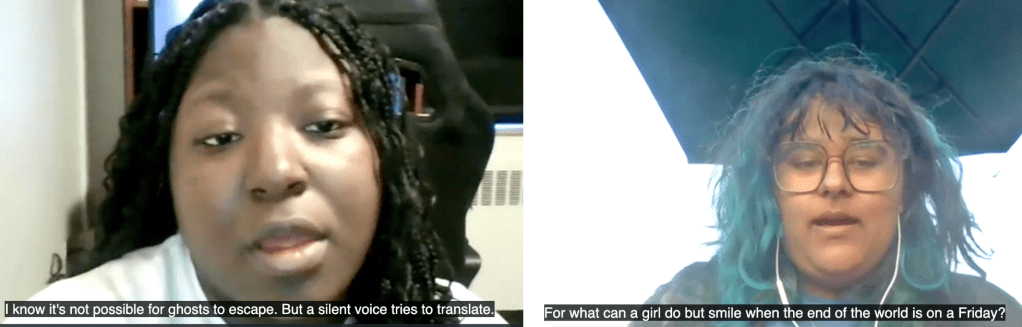
The evening began with readings by student poets Eliza Makhdoom (“Mercy Kill,” “Echoes of a Folded Heirloom,” and “untitled”) and Ashlee Jones (“Inherited Flame,” “People Say,” “Unstable,” and “Hypocrisy”), setting an intimate and contemplative tone for the event. Fuhrman’s reading followed, offering a visceral exploration of the evolution of language, meaning, and identity in a hybrid online era. Professor and Poet-in-residence Dr. Stacy Gnall perfectly described Fuhrman’s work as leaving the reader alternating between wonderfully and hauntingly unsettled.
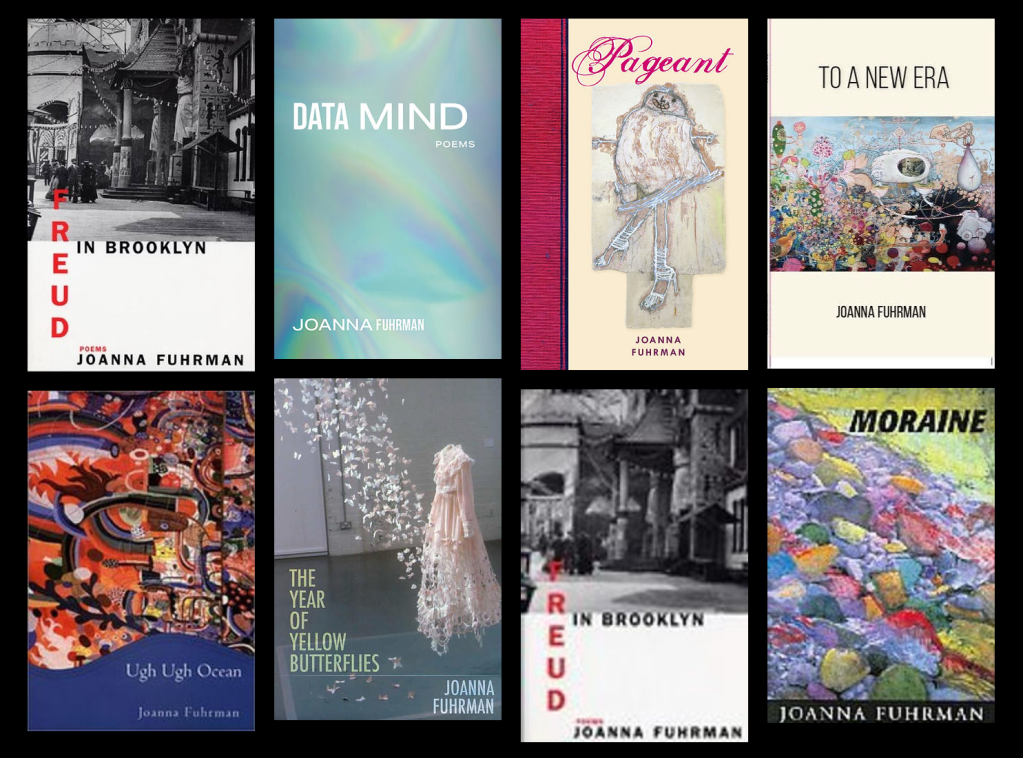
Fuhrman opened with three of her older works, “You Don’t Mean That Gesture, She Said,” “Cybergeddon,” and “To a New Era,” before moving into prose poems about digital life from Data Mind (Curbstone/Northwestern University Press, 2024). In this most recent of her seven published books of poetry, she deftly balances the sensuous, esoteric aesthetics of early 1990s net.art with the surreal humor of contemporary meme culture. Her work situates the female body within this liminal digital chronology, as in the poem “Are You the Invisible Song That Was Playing?” where she writes, “My love of the internet was like my love of the city. In each, I wandered underground, smelling of pomegranates and hemorrhoid cream.” We empathize with this perimenopausal Persephone, caught in the tension between allure and expiration in a world where a carefully curated online presence often eclipses reality.
Fuhrman’s imagery conveys the unsettling feeling of approaching obsolescence in one’s own life. “Understand, I didn’t grow up in this pixelscape,” she writes in “My American Name is Money.” “I don’t know how to remake my face into the face one recognizes in the mirror.” Fuhrman’s poems play with how meaning shifts when words move from the screen to the page. Repetition (even in title), context, and fragmentation blur interpretation. Data Mind exploits this instability as it invites readers to engage with language as a living entity.
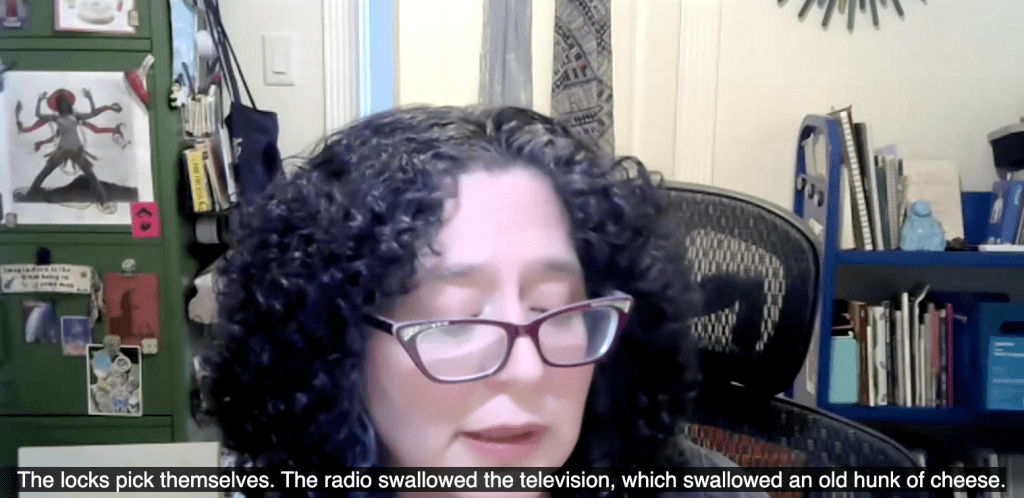
Fuhrman offered more insight into her creative process in the Q and A following the reading, emphasizing the importance of sonic resonance and play. Words and phrases are dissected and reassembled until they betray their emotional and philosophical textures. She recommended keeping a certain distance from feelings and instead listening to the language itself. A shift of emphasis to listening and playing, rather than solely expressing, can help the writer not get stuck in their own head. In her own words, “if you know too much of what you’re going to say, then you’re not discovering anything.” Fuhrman’s poetry and honest advice at this event offered an inspiring glimpse into the continuing evolution of writing, reaffirming her position as one of the most innovative voices in contemporary American poetry. A voice that urges people to “keep writing, supporting each other, and building community.”

Erin DeFever (’26) is an overzealous cinephile majoring in Religious Studies and English Literature with a minor in Women’s and Gender Studies. She enjoys translating ancient Sumerian incantations, texting absurd memes, and posing with grapes as a symbol of opulence and delectation.
 Between the Pages
Leave a comment